THE FILIPINA WHO DARED TO TRY
Bienariston’s Story of
Self-Employment in Belgium
Migrants can be entrepreneurs, too
On a summer evening in 2023, in a half-renovated home in Zeebrugge, on the coast of Belgium, a group of Filipinos gathered around a table heavy with seafood.
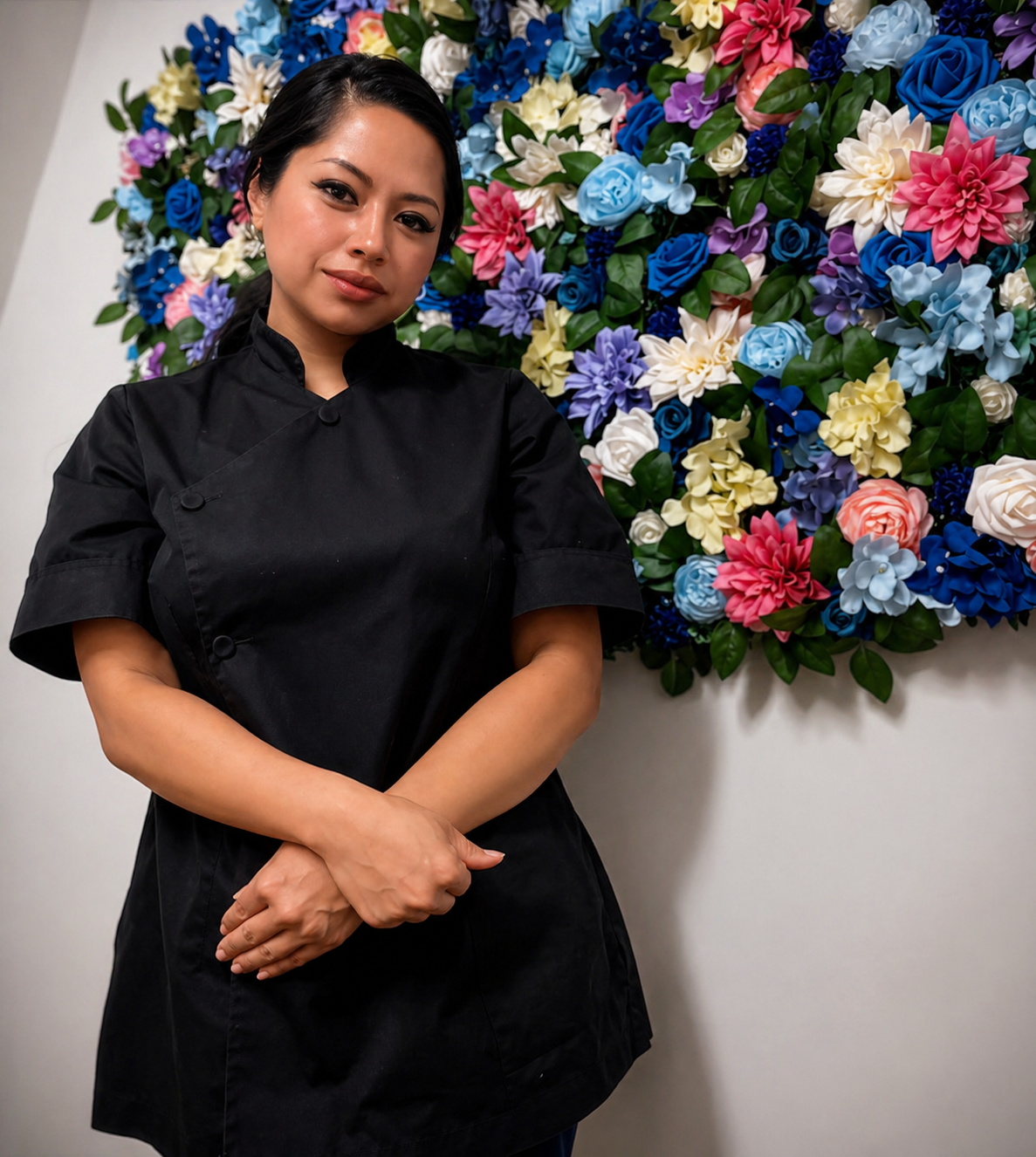
The host, Bien Ariston, moved easily between the kitchen and her guests, laughing, serving, insisting on second helpings. The house was still unfinished.
The second floor, where her future beauty salon would take shape, still felt like a promise rather than a place.
Outside, nothing marked the moment as significant. Inside, something had already begun.
Across Belgium, the rise of migrant entrepreneurship has been steady, almost quiet in its persistence. Today, roughly one in four self-employed workers has a migration background, according to the Brussels Times published in 2023, a figure that reflects not just economic participation but adaptation, reinvention, and, often, survival. In large cities like Brussels, this could even reach to two-thirds of the self-employed.
An opportunity for Filipino migrants
According to the news outlet GMA News, there are “around 22,000 Filipinos” (roughly 0,2% of the total population in Belgium) living in Belgium since the first wave of migration 50 years ago. Most of the early migrants, it adds, were in the domestic service and care sector. According to the Embassy of the Philippines in Belgium, 7 out of 10 of the Filipinos living in Belgium are women.
For many Filipinos, migration to Belgium begins with work, or the search for opportunity. But for some others, it begins with a relationship. Many Filipino migrants, notably women, are in couples with Belgian men.
Yet one detail often goes unnoticed. Filipinos who arrive in Belgium through family reunification- a legal pathway that allows partners or relatives of residents to join them- and obtain an F card, a residence permit for family members of Belgian nationals, are not limited to working for companies. They have full access to the labor market, including the right to become self-employed. For many migrants, this is a rare opportunity—one that is far more difficult to access through other migration routes.
Filipino entrepreneurs in Belgium, although not too many, can normally be found in the informal sectors, in small salons, restaurants, and small shops and are normally small players scattered around the country. While there is no official statistics on the number of Filipino entrepreneurs in Belgium, their presence is evident in informal business networks and groups in social media, group of friends or friends of friends or Filipino events in Belgium, such as the Philippine Food Festival.
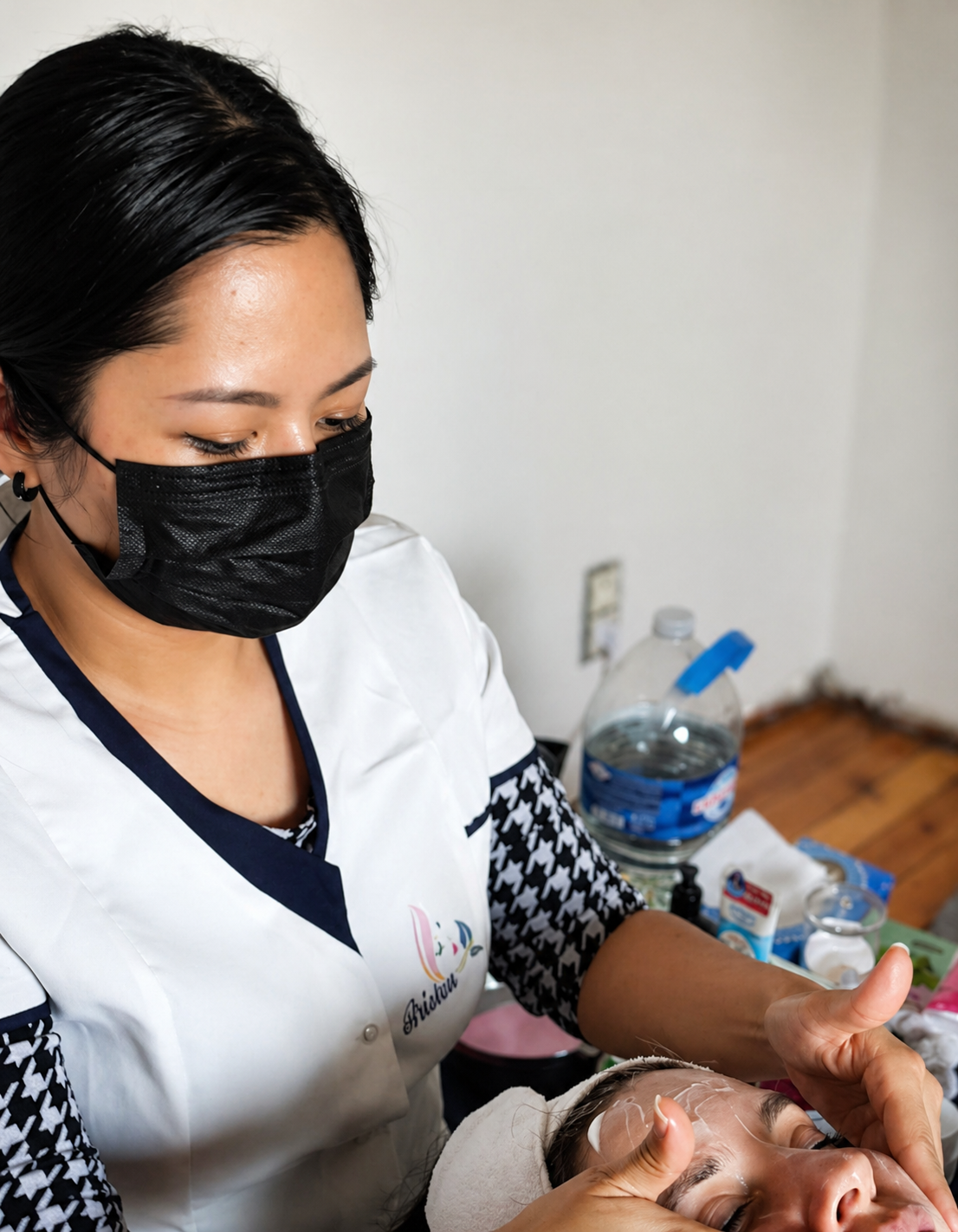
One of them is Bienariston. Bienariston is probably the only Filipina who owns a salon in Zeebrugge. She runs her beauty business, Bienahana Beautyspecialist, where she provides a wide range of personal care and wellness treatments: eyelashes, manicure & pedicure, facials, hair removals, make-up, and of course, massage.
It all began with a children’s bed
She did not begin with a business plan or capital investment. She began by noticing what people need.
“Pag foreigner tayo, wala tayong kilala,” she said. (When you’re a foreigner, you know no one).
In those early days, connection was currency. Clients did not arrive through advertising but through the quality of her work and word of mouth.
The salon did not open fully formed. It emerged, piece by piece, from what was available.
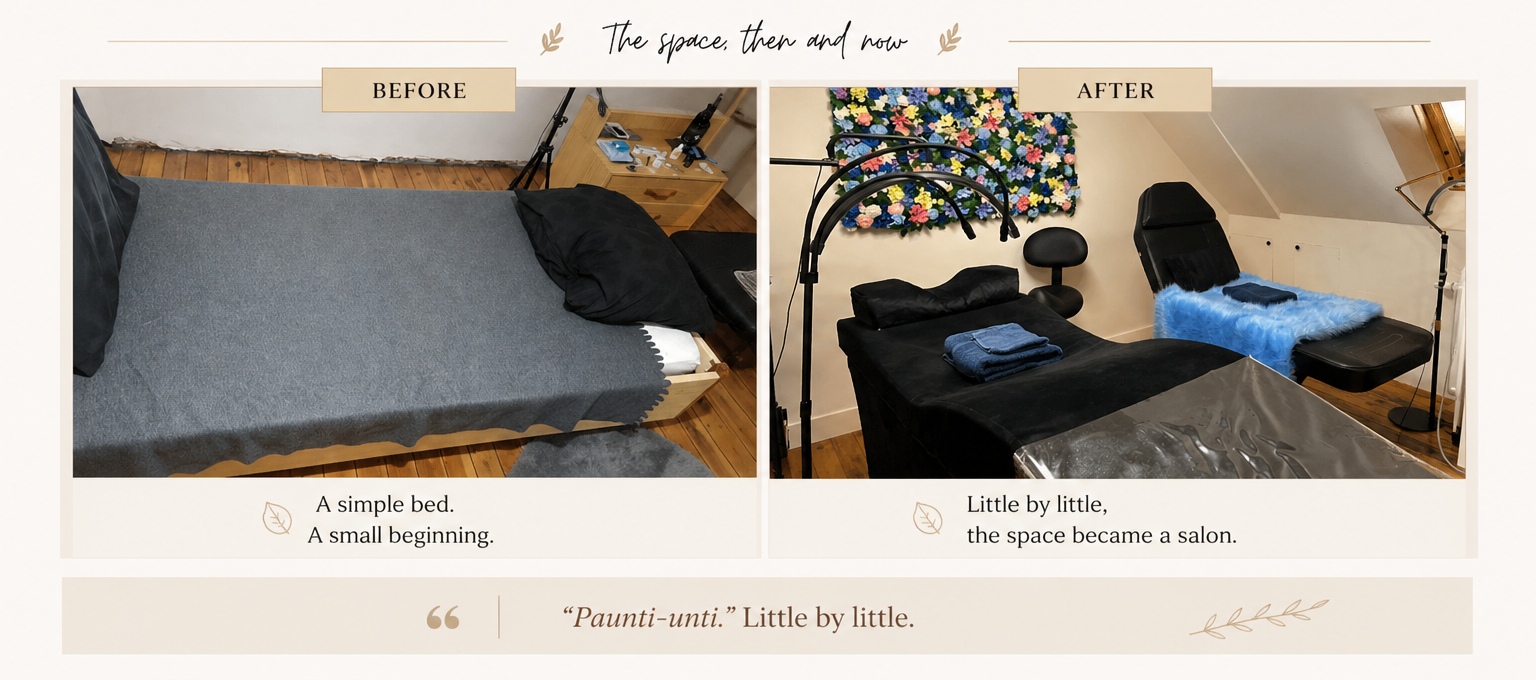
A children’s bed became her first workstation. A modest set of tools, her first investment. No loans. No sudden leap.
“Ayoko mag-loan. I’m just a simple person,” she said.
Her path to Belgium had already been shaped by movement. Born in the Philippines, she moved to Japan at ten, where she grew up negotiating identity in a society that often held outsiders at a distance. She learned early what it meant to be capable and overlooked at the same time.
“They promote someone who knows less, just because they are Japanese,” she recalled. “Even if you know everything.”
So by fifteen, she was already working. By adulthood, she had learned to measure stability not in ambition, but in endurance.
There was a time when she imagined a different future. She wanted to study IT, to design games, to build digital worlds. But life intervened in ways that do not announce themselves as turning points until much later. Her mother fell ill with cancer. Beauty, once effortless, became something fragile, something that could disappear.
“My mom used to be a model,” Bien said. “When she got sick, she lost confidence. I thought… maybe I want to make people feel beautiful again.”
It was not a grand declaration. It was a quiet redirection.
Years later, in Belgium, after a relationship carried her across continents, she found herself rebuilding again. There were years of dependence, then a sudden need for independence. Cleaning jobs. Long hours. Savings accumulated slowly, almost imperceptibly.
For two years, her business existed in the margins, informal, experimental. She worked, saved, reinvested. Skills came first: lashes, treatments, certifications. Equipment followed, only when income allowed it.
“Paunti-unti,” she said. Little by little.
The logic was simple, but disciplined. Spend only what you have earned. Grow only when the ground beneath you feels steady. By the time she had reached her first year of formal self-employment, her business started to take-off.
By the winter of 2026, the room upstairs had completely changed. On January 20, I arrived for a pedicure appointment. Outside, the cold settled over the town. Inside, the space was warm, functional, lived-in. The transformation was not dramatic, but complete.
Her clients now came not only from nearby streets but from places like Knokke. The network had expanded. The reputation had followed.
Just a migrant, but with big dreams
It was not easy to be self-employed in Belgium, especially if you are a migrant.
The first thing we discussed was driver’s license – as the best way to go around Belgium is by car. But getting around Belgium’s roads are not as easy as in the Philippines – there are many rules that must be strictly followed.
She had failed the practical driving exam twice. The system, like many systems, demanded precision under pressure. Mistakes carried weight.
Still, she remembered the advice of her examiner.
“Drive slower. It’s safer. You lose small points, but the big mistakes are fewer.”
It was, in its way, a philosophy she had already been living.
But there is a more nuanced obstacle that migrants face in Belgium: the language barrier. Belgium has three official languages and none of them are English. Because Bien lives in the Dutch-speaking region of Belgium, she was expected to first learn Dutch and be able to hold a conversation in Dutch before she could find a good work – a challenge that not everybody can afford. So most of the Filipino migrants begin to learn humility – to work as a cleaning lady, or as a factory worker, sometimes even if they had diplomas.
Still, being a foreigner carried its own quiet burdens. The assumptions. The constant suggestion that one must try harder, learn faster, prove more.
And yet, there was also space. Space to build, to adapt, to begin again.
What distinguishes Bien’s business is not only its growth, but its intent.
“When I saw salon prices, I thought… why is it so expensive? I want it to be affordable for everybody.”
Her pricing strategy was not about undercutting, but about access. She adjusted as demand increased, raising prices carefully, not as a signal of exclusivity, but as a means to reinvest.
“The more clients I have, the more I can upgrade.”
It is a model that resists spectacle. There are no sudden expansions, no aggressive scaling. Only continuity.
In a broader sense, her story reflects a pattern that economists often describe but rarely narrate in human terms. Migrant entrepreneurs are more likely to start small, to rely on personal savings, to build through networks rather than institutions. Their businesses often cluster in services: beauty, wellness, food, care. These are industries where trust matters, where skill can speak more clearly than credentials, and where entry, while difficult, is not impossible.
For Filipinos in Belgium, this shift carries additional weight. Historically concentrated in domestic and care work, many are now reimagining what self-employment can look like.
“I want others to have opportunities too,” Bien said. “They can do more.”
It is not a rejection of the work that came before, but an expansion of what is possible.
Back in that house in 2023, none of this was visible yet. The seafood, the laughter, the unfinished walls, they held no clear indication of what would follow.
But perhaps that is how most transformations begin.
Not with certainty. Not with scale.
Just a room upstairs.
A decision not to borrow.
A skill practiced in quiet.
A belief, held steadily, that something small can grow.
And the patience to let it.
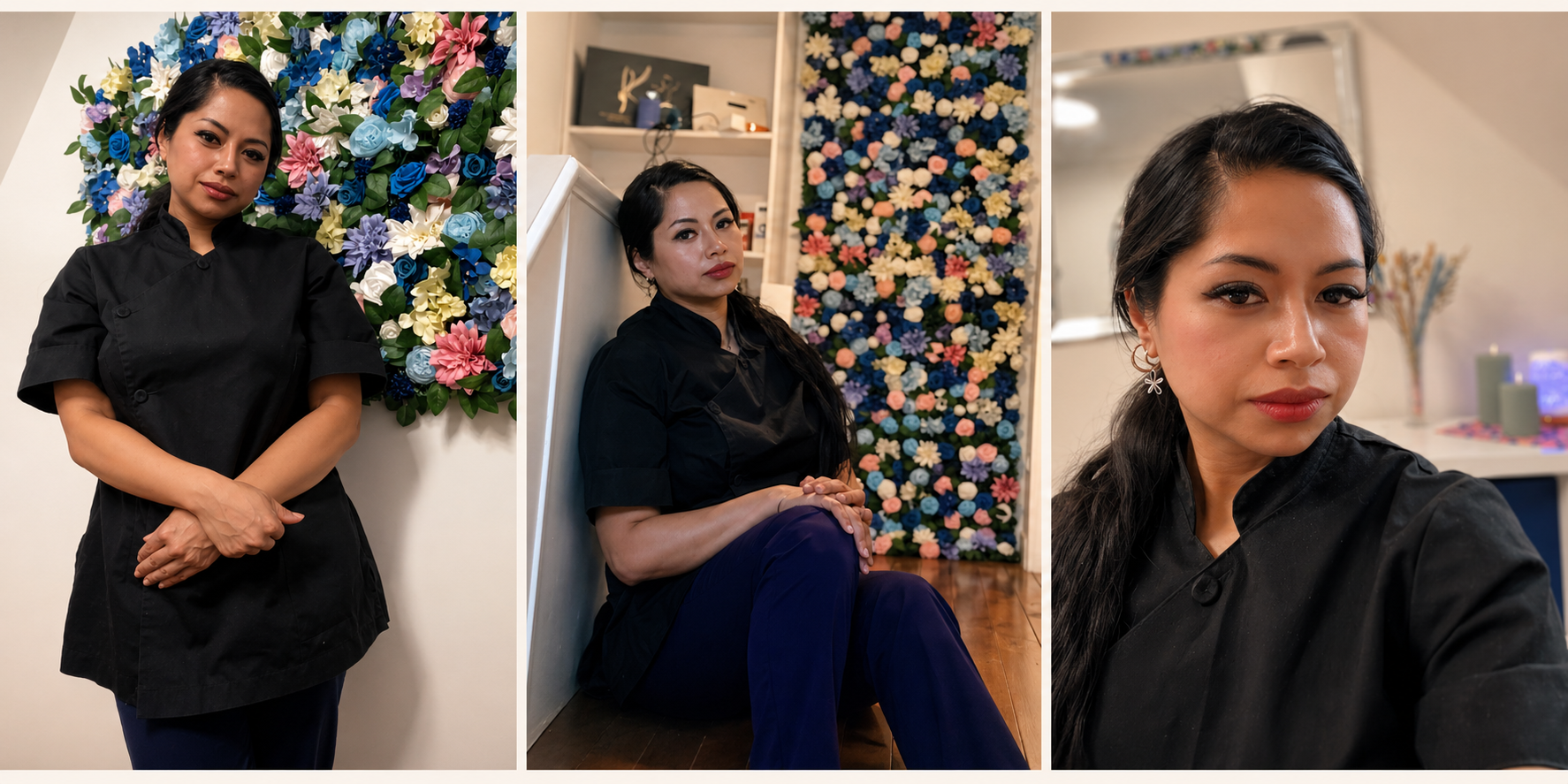
Bienariston will soon open her Beauty Wellness Academy. Support her and follow her page on Instragram and Facebook!